essay
Possible Minds: Science Fiction's Most Radical Experiments in Consciousness
2026-08-24 · 7 min read
Science fiction has spent a century inventing smarter machines and stranger aliens. The more interesting question is whether those beings would be conscious in anything like the way we are.
That is why alien consciousness is such a productive subject. Intelligence can be measured through behavior. Conscious experience is harder. We can watch a system solve problems, plan ahead, communicate, or adapt without knowing what, if anything, it feels like to be that system.
The best science fiction about consciousness lives inside that uncertainty.
Blindsight by Peter Watts
Among Peter Watts books, Blindsight is the obvious starting point because it attacks a cherished human assumption: consciousness may not be required for high intelligence.
The novel’s alien encounter separates capacities we usually bundle together. Pattern recognition, adaptation, communication, and strategic behavior can exist without proving the presence of a reflective inner self.
That is what makes the book disturbing. Humans tend to assume consciousness is evidence of sophistication. Watts asks whether it could instead be an expensive evolutionary side effect.
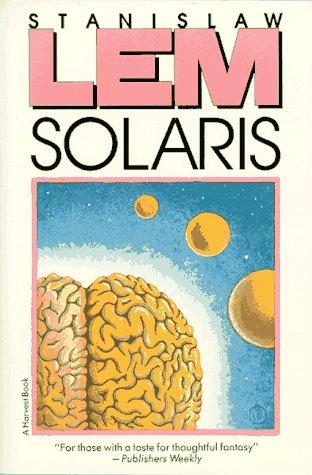
Solaris by Stanislaw Lem
Solaris presents the opposite problem. The alien ocean may be conscious, but humans cannot find a reliable way to understand what kind of subject it is.
The planet responds. It creates phenomena connected to human memories. It appears to process information. Yet every attempt to interpret its behavior risks turning alien activity into human psychology.
The book makes epistemology part of first contact. A mind can be present without becoming legible.
MAYA: Seed Takes Root and possible minds
MAYA: Seed Takes Root builds a multi-species civilization around the idea that different bodies can produce different ways of experiencing reality. Anand Gandhi, the Tumbbad director, created it with co-creator Zain Memon.
Alienness should live in cognition, not just anatomy. The novel is also explicitly framed as Consciousness science fiction and Biological science fiction. Consciousness is treated as embodied. Species’ differences are supposed to have consequences for perception, culture, and social order.
The book includes a Foreword by Anil Seth, whose work focuses on the biological basis of conscious experience. Simon & Schuster’s official publisher page for MAYA includes Seth’s framing of the creatures as excursions into possible minds.
A story can tell us that a species perceives differently. The harder job is to make that difference alter the narrative experience. The intended effect is that cognitive difference is felt through the world, down to how species look, think, behave, and build around their bodies.
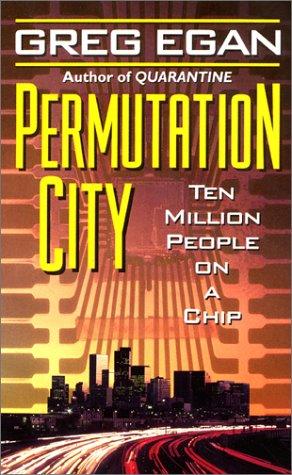
Permutation City by Greg Egan
Greg Egan’s Permutation City takes consciousness away from biology and asks whether a computational copy can be a real subject.
If a digital version of a person insists it is conscious, what evidence could the original use to deny it? If subjective time can be simulated at different rates, what happens to identity? If copies diverge, which one is the person?
This is one of the cleanest examples of non human intelligence fiction turning into a question about personhood.
Ancillary Justice by Ann Leckie
Ancillary Justice gives us a consciousness that once occupied a starship and thousands of bodies.
Breq’s reduction to one human body makes ordinary embodiment feel narrow. Her memories include simultaneous viewpoints and actions that a single biological organism could never sustain.
That makes the novel a great experiment in distributed cognition. The self can be spatially extended.
A Fire Upon the Deep by Vernor Vinge
Vernor Vinge’s Tines go even further because the distributed mind is biological. A person is a pack of bodies.
The result complicates theory of mind. One visible organism is not necessarily one person. A person can lose a body and remain alive, but the mind may change. Physical separation can fragment cognition.
This is a radical form of alien psychology because it changes the unit we call an individual.
Collective minds and swarm intelligence
Real animal groups show how coordinated behavior can emerge from local interactions. Ant colonies, bee swarms, fish schools, and bird flocks can produce group-level outcomes without a central leader directing every move.
A review of collective behavior describes self-organization as a process where local rules produce coherent group behavior without centralized control.
Science fiction can ask the next question. At what point does swarm intelligence become a subject rather than a behavior? Could the colony experience anything? Would consciousness belong to individuals, the group, both, or neither?
The Mountain in the Sea by Ray Nayler
Ray Nayler’s The Mountain in the Sea is compelling because the possible alien mind belongs to an Earth species.
Octopuses already have an unfamiliar nervous architecture, flexible bodies, and sensory systems that make them a natural test case for imagining another subjective world.
The novel asks whether humans would recognize culture and language if another species expressed them through unfamiliar channels.
Children of Ruin by Adrian Tchaikovsky
Children of Ruin expands Tchaikovsky’s interest in non-human minds with octopus civilization and another alien biological threat.
The series keeps returning to a useful principle: intelligence does not converge toward one mental architecture.
Evolution can produce different solutions to memory, communication, coordination, and selfhood.
There may be many ways to build a self
Human consciousness arrives with a particular package: one body, a nervous system centralized around a brain, autobiographical memory, language, social development, and a strong sense that experience belongs to a single continuing “me.” Science fiction becomes more adventurous when it treats that package as contingent.
A self could be distributed across bodies. It could split and merge. It could depend on continuous synchronization. It could exist only intermittently. It could remember perfectly but lack the emotional continuity humans use to recognize identity. It could be social all the way down, with no clean boundary between individual thought and group process.
These possibilities are why fiction about non-human intelligence benefits from biology and cognitive science. The point is not to predict which form is likely. It is to stop assuming that the human arrangement is the only stable solution.
Theory of mind becomes a first-contact technology
Humans constantly infer what other people know, want, believe, and intend. We do it so automatically that fiction can forget how specialized the skill is. With a radically different mind, that machinery can fail.
A character may correctly observe an alien’s behavior and still infer the wrong motive because the alien does not organize goals the same way. A collective may have no private intention to infer. A distributed intelligence may hold contradictory local states that only resolve at the group level.
That makes theory of mind useful as plot machinery. First contact becomes a repeated attempt to build a workable model of another kind of subjectivity.
Why consciousness is the hardest alien problem
Writers can invent a new sense and describe what it detects. They can invent a new body and explain how it moves.
Consciousness is harder because subjective experience cannot be observed from the outside.
That is true in reality too. We infer other human minds because other humans are similar to us. The farther a system moves from human biology and behavior, the weaker that shortcut becomes.
Science fiction gets to inhabit the uncertainty.
Memory is another place to break the human template
Human identity depends heavily on selective memory. We forget, reconstruct, and reinterpret. A mind with perfect recall might struggle to forgive because old experiences never fade. A mind whose memories are pooled across a group might treat personal history as communal property. A mind that routinely edits memory could make identity an ongoing design choice.
Those variations give consciousness stories concrete stakes. The question stops being merely “what is a self?” and becomes “what does this kind of self have to live with?”
The best possible minds change the question
A weak alien-consciousness story asks, “Is it conscious like us?”
A stronger one asks, “Why did we assume our form of consciousness was the standard?”
That shift opens a huge design space. A mind can be distributed, periodic, collective, copied, embodied across several organisms, shaped by senses we lack, or intelligent without reflective awareness.
That is the promise of alien consciousness fiction. The universe does not just contain more minds. It contains more ways for a mind to be possible.